School Site Services
A Solution thru Treatment, Education, and Prevention, Inc., strives to provide counseling for individuals and families to enhance their own physical, cognitive, emotional, and spiritual growth to support a safe and drug free community. A Solution Inc believes that early intervention is key to finding freedom from all mental health related issues including substance use disorders. We are here to help all those individuals in need.

Adolescent Services
Adolescent services are provided by qualified counselors to help prevent the ongoing use of alcohol and drugs. Students receive current, evidence‑based education that dispels common myths—such as the belief that vaping or smoking THC is safe. Counseling also includes support with substance‑related concerns, emotional regulation, communication skills, and other life‑skills development.
We provide on‑site school counseling across multiple districts in Tulare County, including:
- Visalia Unified School District
- Tulare Joint Union High School District
- Porterville Unified School District
If you are a parent interested in having your child access services at a Tulare County school site, please click the link below. One of dedicated clinicians will contact you as soon as possible.
School Districts We Support



What happens during a counseling session?
Sessions take place during the school day
Students are called out of a non‑core class whenever possible to minimize disruption to academic learning
Sessions typically last 20–45 minutes, depending on the student’s needs and the structure of the day & school policy
Students may participate in individual sessions or group sessions, based on referral needs and clinical judgment
All sessions are confidential. Information is only shared when a Release of Information (ROI) is in place
Each referral provides 12 counseling sessions, with additional sessions available upon request
Requests for services may be submitted by parents, counselors, administrators, teachers, or students
All clinicians adhere to established professional ethical standards in accordance with their discipline
What makes your approach different from traditional “don’t do drugs” programs?
Our program goes beyond traditional “don’t do drugs” messaging. We provide a developmentally informed, evidence‑based approach that meets adolescents exactly where they are in their stage of change. Some teens are ready to make changes, and others are not — and that’s okay. We work with their readiness rather than against it.
Using Motivational Interviewing, we help teens explore their choices, identify what is and isn’t working, and arrive at their own conclusions about the changes they want to make. This approach builds internal motivation rather than relying on pressure, lectures, or fear‑based tactics.
We offer a counseling environment grounded in empathy, compassion, and non‑judgment. Teens are encouraged to speak openly, and we listen with an open mind and a genuine commitment to understanding their experiences.
Substance use is often connected to other challenges, such as communication difficulties, emotional regulation, stress, peer dynamics, or family conflict. We tailor each session to the adolescent’s unique needs, supporting the whole person rather than focusing solely on substance use.
Our goal is to protect long‑term wellbeing while empowering adolescents to build insight, resilience, and healthier patterns over time.
Signs of Addiction
Preoccupation with chemical use
Protecting one’s supply
Use of chemicals as medicine
Rapid intake of chemical
Increased tolerance (needing more of a substance to experience the same effects)
Blackouts (permanent, chemically induced memory losses)
Out-of-control drinking or using of the substance
Physical withdrawals (feeling sick when the substance intake stops)
Denial surrounding use
Drop in academic performance/job performance
Reduced short-term memory
Loss of motivation toward school/work/hobbies
Frequent tardiness and absenteeism
Skipping class
Behavioral changes
Change in circle of friends
Isolation
Mood swings
Secrecy
Change in values, ideas or beliefs
Withdrawal from family or friends
Poor eating & sleeping habits
Feeling angry and/or defensive if friends or family suggest that there is an alcohol or drug problem
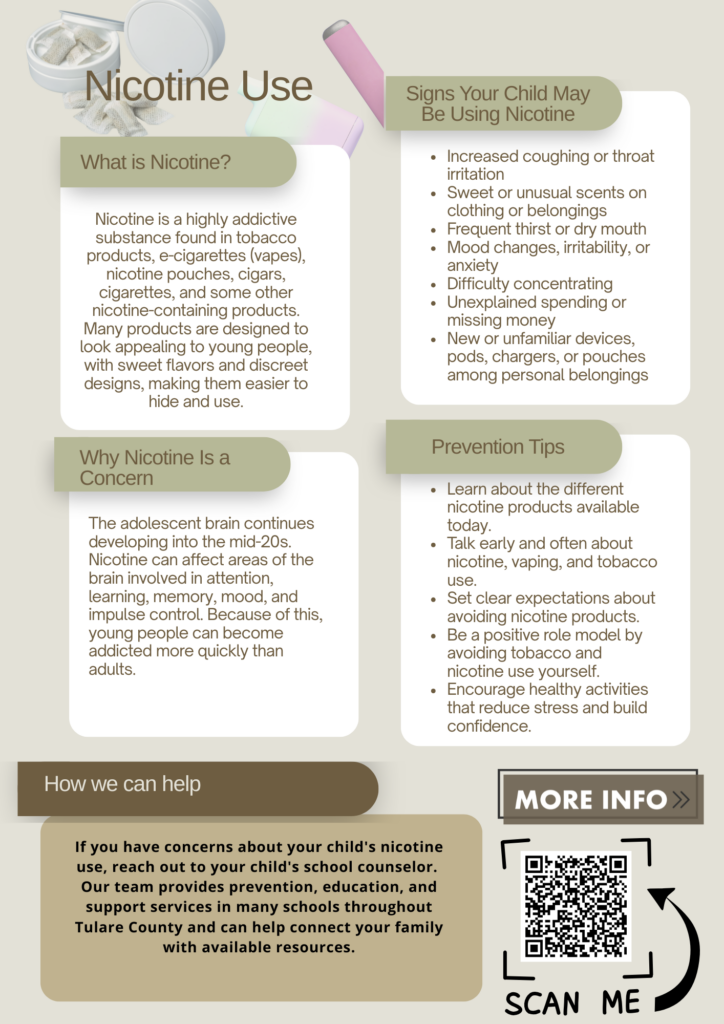
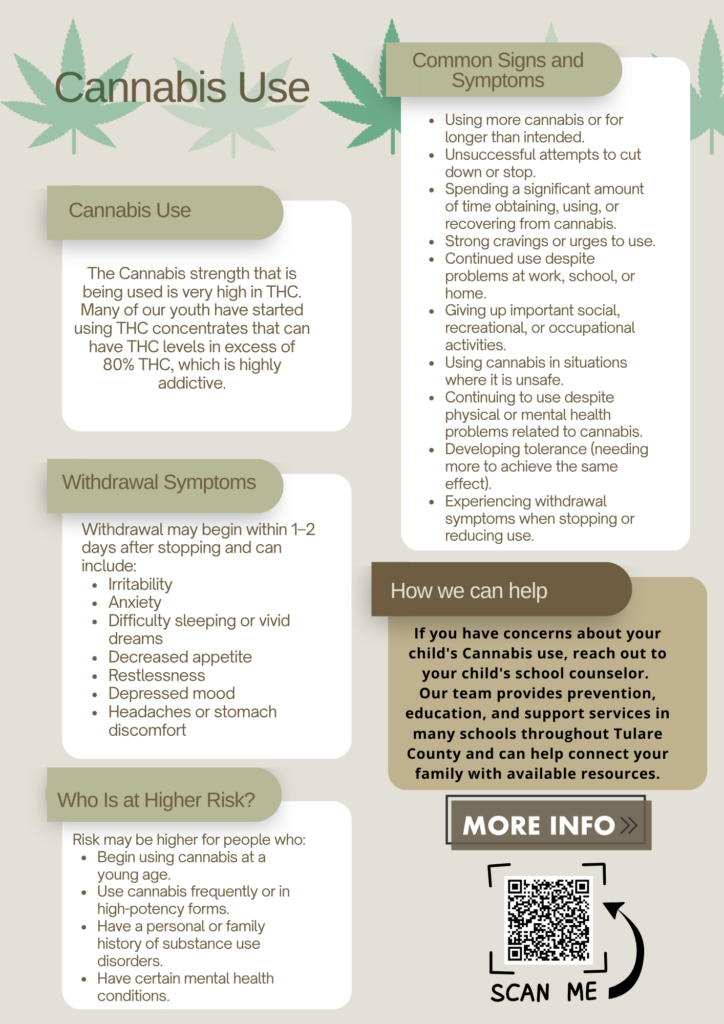
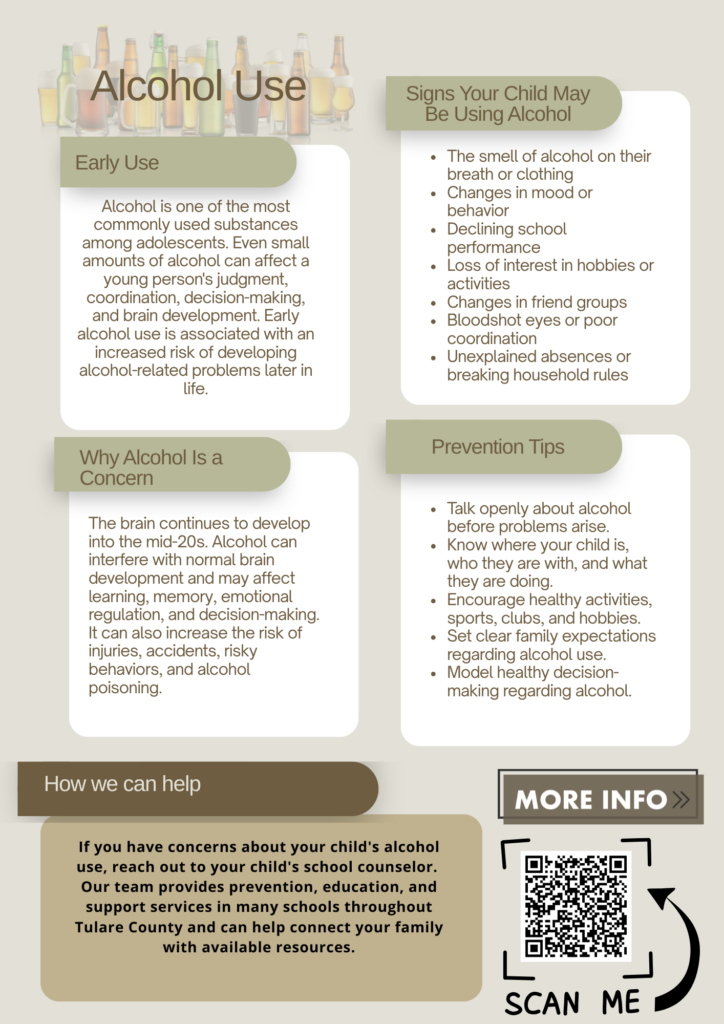
Common Substances & What to Know

Contact Us Today:
559-604-0441